
Kim Philby
Kim Philby - biography
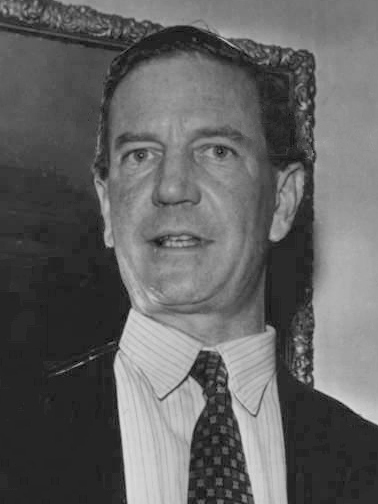
Harold Adrian Russell or Kim Philby (1 January 1912 – 11 May 1988) was a British intelligence officer called the Spy of the 20th Century for his work for the Soviet intelligence. He tried to shorten the World War II, a mission that he felt as his own calling.
Historians say that Philby was a double agent for the Soviet Union. Still, the book readers will find out the different points of view of his closest friends.
In 1963 he was exposed as a member of the Cambridge Five, the most famous spy ring which had sent British secrets to the Soviets during World War II and in the first years of the Cold War. If you read the book, you will find out that this ring was broader – it also included people from the best UK universities. They wanted to stop Hitler and the war. That is why the small group provided Stalin with secret information.
Philby was the most productive of the five in providing secrets to the Soviets, and many experts assume he was the real 007.
Born in British India, Philby graduated from Westminster School and Trinity College, Cambridge. He worked as a journalist and was very close to the circle around Hitler – in this sense, Philby was a classic chameleon. However, Philby could play any role in achieving the great goal of stopping the war and achieving a long-term peace. He was the perfect spy, being groomed to head MI6, but an unexpected betrayal derailed his career. The friends of Philby, lords and different people from the aristocracy stood up for him.
After being exonerated, he worked as a Middle East correspondent for two newspapers, but actually, it was a cover for his real work for MI6.
A new betrayal threatened to deprive him of his beloved job, and in 1963 he decided to flee to the USSR. There, the most famous spy met his great love.
Kim Philby's spouse
Kim Philby had four known spouses: Litzi Friedmann, Aileen Furse, Eleanor Brewer and Rufina Pukhova
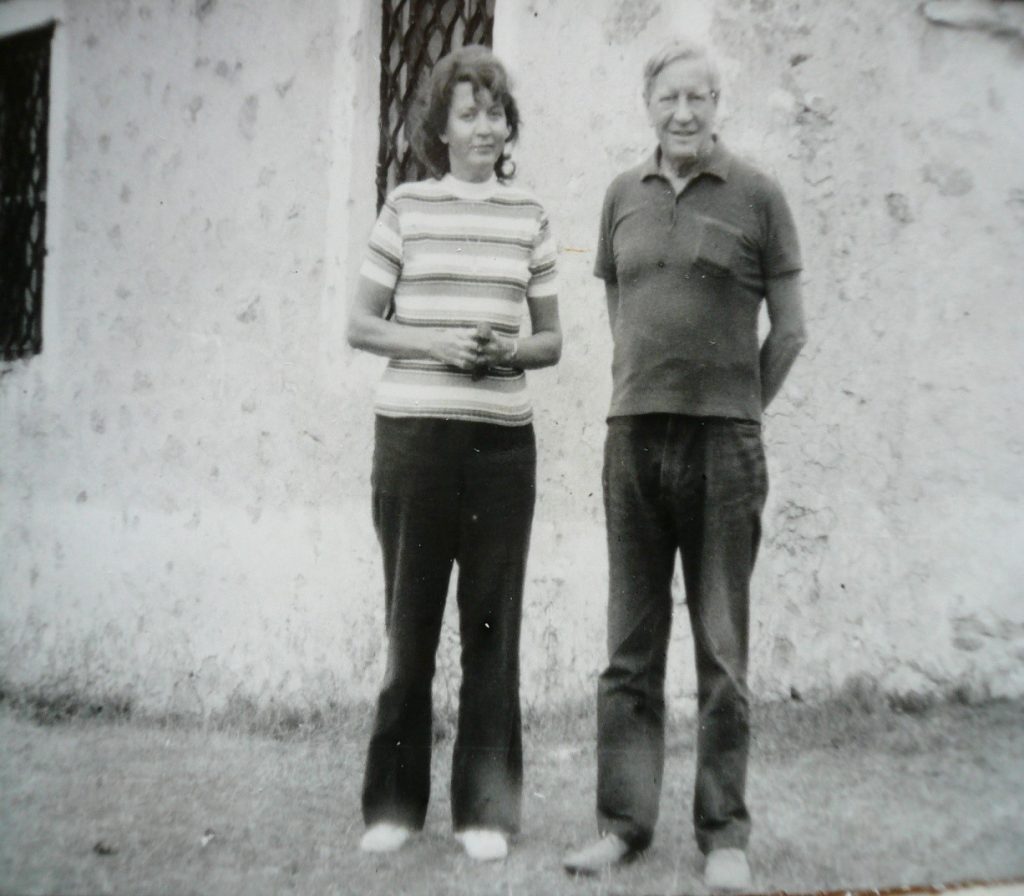
Kim Philby and his wife, Rufina Pukhova-Philby.
My two cents: I talked with Rufina Pukhova-Philby thanks to Gen. Todor Boyadzhiev in 2016 and 2017, and it was a long interview for my book.
Rufina told her story – she was young, charming, intelligent and had a wonderful sense of humor. The spy instantly fell in love with her. For a long time, she ignored him. It worried her that he barely knew her but had already proposed to her even on their second date. In the end, the beauty succumbed to his charm and, by doing so, saved him from depression and alcohol.
In the USSR she was his only support, in contrast to KGB’s demonstrative mistrust. On being asked whether the almighty agency had ever tried to recruit her, Rufina Pukhova says: Many people think I was a plant, but the truth is we met accidentally, because of work. I remember that we were already dating when at some point he dialed a number. I truly don’t know who he called, but he stated quite harshly in the receiver, with an icy categorical tone, that he was getting married.
Rufina’s story will tell you what life was like for a couple under constant KGB surveillance in Moscow. How did they cope with the desperate reality? What difficulties did they experience? You will find the answers to these questions (and many more fascinating stories) in my book.
Kim Philby's book
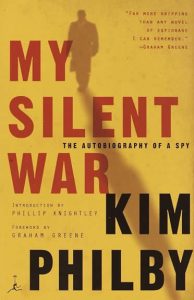
Kim Philby's own memoir, My Silent War, was written and finished in Moscow in 1967. It was originally published in 1968 in London and has been republished several times ever since.
My two cents: The book written by Kim Philby provides the most substantial evidence to support my argument that he did not remain loyal to Stalin and his secret services, instead, he employed deceitful methods to reach his objective of a more harmonious and better world. You will find all the evidence to support my claim in my book.
Kim Philby and Nicholas Elliott
Nicholas Elliott was an MI6 intelligence officer. He and Philby had been friends, and Elliott was deeply hurt by Philby’s betrayal. They last met in Beirut, in 1963, where Elliott tried to obtain a written confession of Philby’s espionage.
My two cents: Elliott’s meeting with Philby in Beirut was a rather unusual episode. What was Elliott’s true objective? Was this meeting just a charade? What mistakes did Elliott make, or maybe they were a part of a bigger plan? The book includes the testimonies of Philby’s associates and Gen. Todor Boyadzhiev’s comments on the episode.
Perhaps in order to hint that Philby never served a single agency but only his own dream, his friend Nicholas Elliott suggested that the MI6 decorate him with St. Michael and St. George medals for extraordinary non-military merits in a foreign country. Ben Macintyre, in his book, quotes Elliott as admitting that he could only now reveal that Philby was one of the most courageous men he had ever met. Elliott’s position was that Philby had been not a Soviet spy but a heroic British triple agent, obviously hinting that he had been a connection between the MI6, CIA and KGB, whom he had unofficially worked with. The British intelligence rejected the idea of awarding Philby for non-military merits in a foreign country. Many thought Elliott was joking, but or was he? Moreover, in the final years of his life, Elliott described Philby using the phrase “Don’t judge a man by his umbrella.”
Why did he say this? If you read my book, you will find compelling evidence that Elliott was right.
How did Kim Philby die?
Philby died of heart failure in Moscow on May 11, 1988. He was 76-years old.
My two cents: What did he regret at the end of his life? What advice did he give to his students? Did he participate in special operations in the USSR? What does he say in his final letter to Gen. Boyadzhiev?
“That is how I remember him – THE HAPPY KIM,” Boiadzhiev shares. “My relationship with him was the most rewarding experience of my professional career. The biggest prize I could have received during my years of serving the Bulgarian intelligence… Philby left this world disappointed by the current situation, but he believed in his ideals and held out hope that one day, many, many years later, his Utopia will become a reality.”